
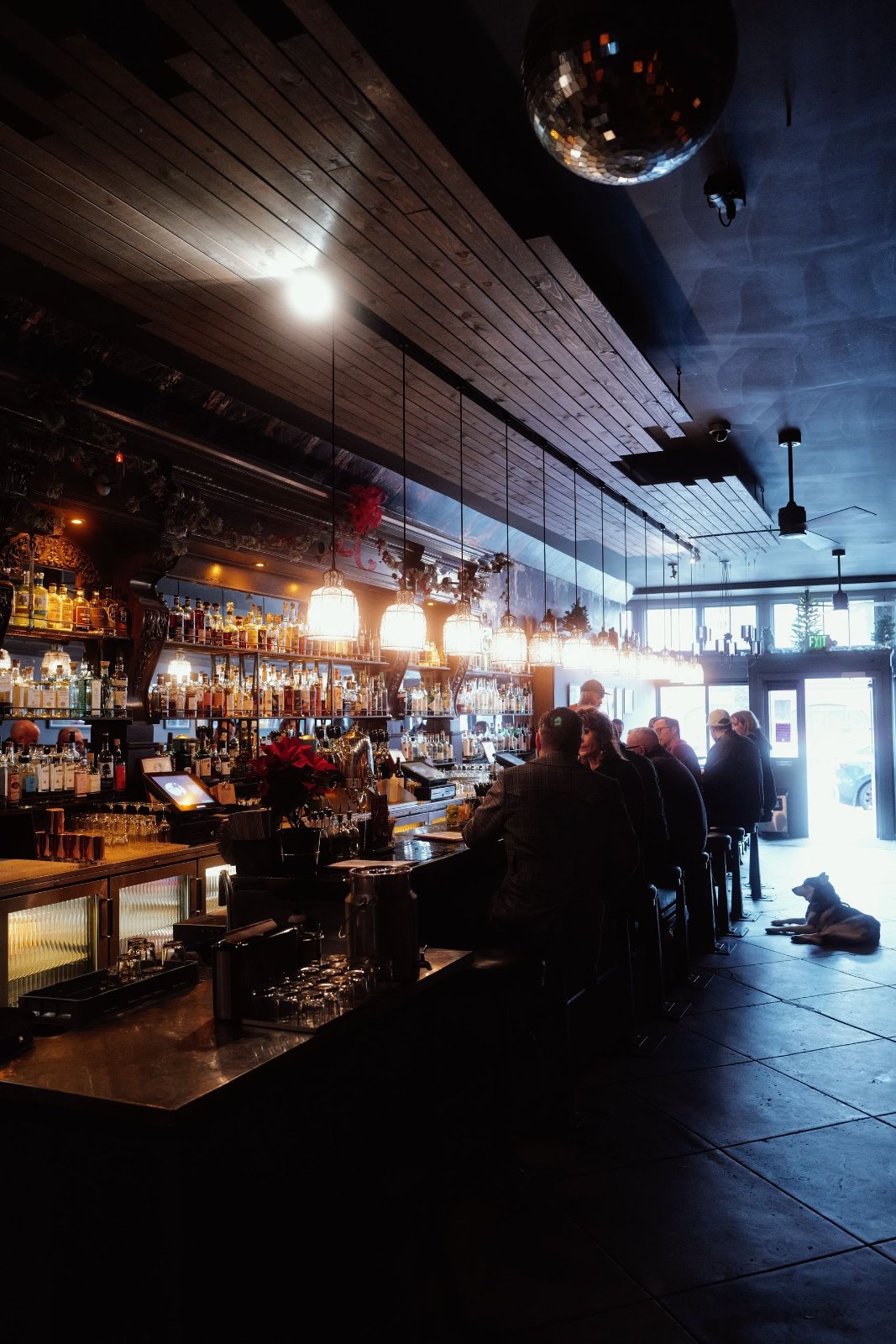
If you’ve ever stumbled out of a bar crawl feeling like the most charming, charismatic version of yourself, you might have wondered whether that feeling was just the drinks talking — or something more. As it turns out, science has a surprisingly nuanced take on what happens inside your brain during a well-organized social crawl, and the effects might linger far longer than your hangover. For Phoenix, AZ residents who’ve been hitting the local bar scene regularly, this is one read you won’t want to skip.
We’re not here to tell you that drinking is a health food. But we are here to explore the fascinating neurological and psychological mechanisms that kick in when you engage in structured, social bar-hopping — especially when it’s done consistently and responsibly. Grab a glass of water (or your drink of choice), get comfortable, and let’s take a deep dive into what’s really going on upstairs when you bar crawl weekly.
The Neuroscience of Social Interaction: Why Your Brain Loves a Crowd
Before we even get to the bar crawl itself, it’s worth understanding why human brains are so deeply wired for social engagement. Neuroscientists have long known that the brain’s reward system — particularly the mesolimbic dopamine pathway — lights up during positive social interactions. This is the same system activated by food, music, and yes, alcohol. But here’s the kicker: social bonding on its own produces measurable neurochemical changes that can last well beyond the moment of interaction.
When you meet new people, share laughs, navigate conversations, and feel genuinely accepted in a social setting, your brain releases a cocktail of feel-good chemicals including dopamine, serotonin, and oxytocin. Oxytocin, often called the “bonding hormone,” is particularly interesting because it doesn’t just make you feel warm and fuzzy in the moment — it actually recalibrates how your brain perceives social risk over time.
Oxytocin and the Social Confidence Loop
Here’s where things get genuinely fascinating. Research published in journals like Psychoneuroendocrinology has shown that repeated positive social experiences can gradually lower the brain’s threat response to unfamiliar social situations. In plain English? The more often you put yourself in social settings and come out feeling good, the less scary those settings feel in the future.
This is what neuroscientists sometimes call a “confidence feedback loop.” Each successful social interaction — even a brief, casual one — sends a signal to your amygdala (the brain’s fear and anxiety hub) that the situation was safe. Over time, with repeated exposure, your amygdala essentially learns to chill out. The result? You walk into rooms with more ease, you talk to strangers with less internal friction, and you carry yourself with a quiet confidence that others can actually sense.
“Repeated positive social exposure doesn’t just make you feel better in the moment — it literally rewires the threat-detection systems of your brain, making future social situations feel less daunting.” — Dr. Matthew Lieberman, UCLA Social Cognitive Neuroscience Lab
The Role of Novelty in Neural Rewiring
Bar crawls have a unique structural advantage over, say, going to the same bar every Friday night: novelty. Each new venue on a crawl introduces your brain to a slightly different environment — new faces, new sounds, new layouts, new energy. Neuroscientists have found that novelty itself triggers dopamine release, which enhances memory consolidation and learning. This means that the social skills you practice during a bar crawl are more likely to stick because your brain is in a heightened state of engagement.
In Phoenix, AZ — a city with a remarkably diverse and vibrant bar scene spanning everything from rooftop lounges in Downtown Phoenix to craft beer havens in the Melrose District — bar crawls naturally expose you to a wide spectrum of social environments. That variety isn’t just fun. It’s neurologically stimulating in ways that a single-location evening out simply can’t match.
What Actually Happens in Your Brain During a Bar Crawl
Let’s walk through the evening, neurologically speaking. Understanding the sequence of brain events during a bar crawl helps explain why the experience can have such lasting effects on social confidence.
Phase One: Anticipation and the Dopamine Pre-Load
Before you even step foot in the first bar, your brain is already getting to work. Anticipation of a pleasurable social event triggers a pre-release of dopamine in the nucleus accumbens — the brain’s pleasure center. This is why you often feel excited and energized just getting ready for a night out. Your brain is essentially pre-loading the reward system.
For regular bar crawlers in Phoenix, this anticipatory dopamine hit becomes associated with the ritual itself — the group chat, the outfit selection, the Uber ride over. Over time, even these preparatory steps begin to feel rewarding, reinforcing the behavior and building a positive psychological association with social outings.
Phase Two: First Contact — The Social Warm-Up
The first bar on any crawl is where the social warm-up happens. Your prefrontal cortex — the part of your brain responsible for social judgment, impulse control, and reading social cues — is firing at full capacity. You’re scanning the room, assessing the vibe, and beginning the complex neurological dance of human interaction.
At this stage, even modest alcohol consumption (one to two drinks) begins to reduce activity in the parts of the prefrontal cortex associated with social self-monitoring. This is the mechanism behind what most people call “loosening up.” The brain temporarily dials back its internal critic, making it easier to initiate conversations without overthinking every word.
Crucially, this is also where practice begins. Every conversation you start, every joke you land, every moment of genuine connection — these are being encoded as positive social memories that your brain will reference the next time you’re in a similar situation.
Phase Three: Mid-Crawl Flow State
By the second or third venue, something interesting often happens: many bar crawlers report entering what psychologist Mihaly Csikszentmihalyi famously called a “flow state” — a state of effortless engagement where time seems to pass quickly and social interaction feels natural and automatic.
Neurologically, this corresponds to a shift in brain activity where the default mode network (associated with self-referential thinking and social anxiety) quiets down, and the social brain networks become more active and efficient. You stop thinking about how you’re coming across and start simply being present in the conversation.
“The flow state in social contexts is one of the most powerful experiences the human brain can have. It’s characterized by complete absorption, reduced self-consciousness, and a sense of effortless competence.” — Mihaly Csikszentmihalyi, Flow: The Psychology of Optimal Experience
Phase Four: The Consolidation — Why Sleep After a Crawl Matters
Here’s a piece of the puzzle that most people completely overlook: sleep. After a socially rich evening, your brain enters a process of memory consolidation during sleep — particularly during REM cycles. The social skills, conversational patterns, and confidence-building experiences from the night are literally being processed and integrated into your long-term behavioral repertoire.
This is one reason why neuroscientists suggest that the confidence boost from positive social experiences can last for weeks or even months. The brain doesn’t just remember what happened — it updates its operating system based on what it learned. Each bar crawl, done regularly, contributes another layer of social learning that compounds over time.
The Weekly Frequency Factor: Why Consistency Is the Secret Ingredient
One bar crawl is fun. Weekly bar crawls, done over a period of months, can be genuinely transformative — at least from a social neuroscience perspective. Here’s why frequency matters so much.
Neuroplasticity: Your Brain’s Ability to Change
Neuroplasticity refers to the brain’s remarkable ability to reorganize itself by forming new neural connections throughout life. Social behavior is no exception to this principle. Repeated social engagement — especially in varied, stimulating environments — strengthens the neural pathways associated with confidence, empathy, and interpersonal communication.
Think of it like building a muscle. One workout doesn’t make you strong. But consistent training over months creates real, measurable physical change. The same principle applies to your social brain. Weekly bar crawls provide the kind of consistent, varied social training that gradually but meaningfully reshapes how your brain handles social situations.
Habituation: Training Your Amygdala to Stand Down
One of the most well-documented phenomena in behavioral neuroscience is habituation — the process by which repeated exposure to a stimulus reduces the brain’s fear response to that stimulus. Social anxiety, at its core, is an overactive amygdala response to perceived social threat.
Weekly exposure to new social environments — meeting strangers, navigating group dynamics, handling awkward moments and coming out fine — is essentially a form of systematic desensitization. Over time, your amygdala receives the consistent message that social situations are not dangerous. The result is a measurable, lasting reduction in social anxiety that extends well beyond the nights you’re actually out.
Phoenix residents who’ve been participating in regular bar crawls with groups like Barcrawlerz often report exactly this kind of shift — a gradual but noticeable increase in social ease that shows up in professional settings, first dates, networking events, and casual daily interactions. It’s not magic. It’s neuroscience.
The Social Skills Compound Effect
Social confidence is, in large part, a skills-based phenomenon. And like all skills, it improves with deliberate practice. Bar crawls provide an unusually rich environment for social skill development because they compress a high volume of varied social interactions into a relatively short time frame.
In a single evening crawl, you might navigate introductions with strangers, hold conversations over loud music, tell stories to groups, read social cues in unfamiliar settings, handle moments of awkwardness gracefully, and transition between social contexts multiple times. Each of these micro-experiences is a repetition — a small deposit into your social confidence bank account.
Do this weekly for three to six months, and the compound effect becomes genuinely significant. You’re not just more practiced — you’ve fundamentally updated your brain’s model of who you are in social situations.
Phoenix, AZ: Why the Local Bar Scene Is Uniquely Suited for Social Growth
Not all bar scenes are created equal, and Phoenix has some genuinely unique characteristics that make it an excellent city for the kind of socially enriching bar crawl experience we’re describing.
A Diverse and Rapidly Evolving Nightlife Landscape
Phoenix’s nightlife has undergone a remarkable transformation over the past decade. The downtown core has exploded with new venues, from sophisticated cocktail bars and live music venues to casual neighborhood spots and themed bars. Areas like Roosevelt Row, the Warehouse District, and Scottsdale’s Old Town offer dramatically different social atmospheres within relatively close proximity — perfect for a multi-stop crawl that keeps your brain engaged through novelty.
This diversity matters neurologically. As we discussed earlier, novelty drives dopamine release and enhances the brain’s learning mode. A Phoenix bar crawl that takes you from a craft cocktail lounge to a dive bar with live country music to a rooftop terrace with skyline views is delivering a genuinely varied neurological experience — not just a fun night out.
Phoenix’s Social Culture: Warm, Welcoming, and Open
There’s something about Phoenix that makes it particularly conducive to the kind of open, low-pressure social interaction that builds confidence. Maybe it’s the warm weather that keeps people in a relaxed, vacation-like mindset year-round. Maybe it’s the city’s relatively young demographic and its culture of newcomers (Phoenix consistently ranks as one of the fastest-growing cities in the US). Whatever the reason, Phoenix tends to have a social scene where strangers talk to strangers, where conversations start easily, and where the vibe is generally welcoming rather than competitive.
For someone working on their social confidence, this is a genuinely valuable environment. The lower social stakes make it easier to take conversational risks, try out new aspects of your personality, and practice the kind of authentic self-expression that builds real, lasting confidence.
Barcrawlerz: Structured Social Experiences in Phoenix
One of the most effective ways to leverage the social confidence benefits we’ve been discussing is to participate in organized, structured bar crawls rather than ad hoc evenings out. This is where Phoenix-based Barcrawlerz comes in.
Barcrawlerz specializes in creating curated bar crawl experiences across Phoenix that are specifically designed to maximize social engagement. Rather than wandering from bar to bar with the same small group, Barcrawlerz events bring together larger, diverse groups of people — which means more opportunities for novel social interactions, more variety in the conversations you’re having, and a structured framework that makes it easy to meet people without the awkwardness of cold approaches.
From a neuroscience perspective, this kind of structured social event is nearly ideal. You have the novelty of multiple venues, the social lubricant of a shared group activity, the low-pressure environment of a fun evening out, and the consistent exposure that builds confidence over time. It’s social training with a party atmosphere.
Addressing the Elephant in the Room: What About the Alcohol?
We’d be doing you a disservice if we talked about bar crawls without honestly addressing the role of alcohol. The social confidence benefits we’ve described are real — but they come with important caveats about responsible consumption.
The Difference Between Social Lubrication and Dependency
Moderate alcohol consumption in social settings can genuinely reduce social anxiety in the short term by dampening the prefrontal cortex’s self-monitoring functions. This is the “social lubrication” effect, and it’s neurologically real. However, there’s a crucial distinction between using alcohol as an occasional social facilitator and relying on it as a crutch for social confidence.
If you find that you can only feel socially comfortable when drinking, that’s a sign that the neurological benefits we’ve described aren’t being properly internalized. The goal of regular social exposure is to train your brain to be confident sober — to make the social skills and confidence genuine, not chemically dependent.
“The social benefits of bar culture come from the social interaction itself, not from the alcohol. The alcohol can lower the initial barrier to entry, but the real neurological work is being done by the human connection.” — Dr. Robin Dunbar, Oxford University, Evolutionary Psychology
Responsible Bar Crawling: Maximizing Benefits, Minimizing Risks
Here are some practical guidelines for getting the most out of your weekly bar crawl experience while keeping your health and safety front and center:
Pace yourself intentionally. The goal is to stay in a socially engaged, present state throughout the evening — not to get heavily intoxicated. Heavy drinking actually impairs the memory consolidation process that allows social learning to stick, which defeats the neurological purpose entirely.
Hydrate consistently. Alternating alcoholic drinks with water isn’t just good for your health — it helps maintain the cognitive clarity you need to actually practice and internalize social skills.
Focus on connection over consumption. The bars are the setting, not the point. The point is the people. Prioritize conversations, not drink counts.
Arrange safe transportation. Phoenix has excellent rideshare options, and Barcrawlerz events are typically structured around walkable or easily navigable routes. Plan ahead so that getting home safely is never a concern that disrupts your evening.
The Long-Term Picture: What Six Months of Weekly Bar Crawls Could Do for Your Social Life
Let’s paint a realistic picture of what consistent, responsible, socially-focused bar crawling over a six-month period might actually look like in terms of personal development.
Months One and Two: The Warm-Up Phase
In the first couple of months, you’re primarily in habituation mode. Each week, your amygdala is receiving new data points that social situations are manageable and often enjoyable. You might notice that you’re slightly less nervous walking into new venues, slightly quicker to start conversations, and slightly more comfortable with silence and awkward moments.
These changes are subtle but real. Your brain is updating its social threat model in real time, and the neural pathways associated with social confidence are beginning to strengthen through repeated use.
Months Three and Four: The Skill-Building Phase
By the midpoint, most consistent bar crawlers notice more significant shifts. Conversations come more naturally. You’re better at reading social cues, better at transitioning between topics, better at making people feel at ease. You’ve accumulated enough positive social memories that your brain has a robust reference library to draw from in new situations.
People in your life may start commenting that you seem “more confident” or “more relaxed” in social settings — even in contexts completely unrelated to bar crawls. This is the compound effect of neuroplasticity in action.
Months Five and Six: The Integration Phase
By the five to six month mark, the social skills and confidence developed through consistent bar crawling begin to feel genuinely integrated — less like something you’re practicing and more like who you are. The neural pathways have been reinforced enough times that confident social behavior has become your default mode rather than something you have to consciously work toward.
This is what neuroscientists mean when they say that social confidence built through repeated positive exposure can last for months or even years. It’s not that the bar crawls have made you permanently dependent on a social crutch — quite the opposite. They’ve trained your brain to handle social situations with ease, and that training sticks around long after any given evening ends.
Practical Tips for Making Your Phoenix Bar Crawl Neurologically Effective
If you’re sold on the idea and ready to start leveraging your Phoenix nightlife for genuine social growth, here are some actionable strategies to maximize the neurological benefits.
Set an Intention Before You Go Out
Before each crawl, take sixty seconds to set a specific social intention. It might be as simple as “I’m going to introduce myself to three people I don’t know” or “I’m going to practice asking follow-up questions in conversations.” Intentional practice is significantly more effective than passive exposure when it comes to skill development and neural pathway formation.
Debrief After Each Evening
Take a few minutes before bed to mentally review the evening. What social moments felt good? What felt awkward? What would you do differently? This kind of brief reflective practice enhances memory consolidation during the upcoming sleep cycle and accelerates the learning process.
Mix Up Your Crew
Going out with the same tight-knit group every week limits your exposure to novel social dynamics. Periodically join larger organized events — like those offered by Barcrawlerz in Phoenix — where you’ll be interacting with people outside your usual social circle. The unfamiliarity is the point. It’s what keeps your brain in growth mode rather than comfort mode.
Stay Present and Put the Phone Down
Social media and smartphone use during social outings literally disrupts the neurological processes we’ve been describing. When you’re scrolling your phone instead of engaging with the people around you, you’re depriving your brain of the social input it needs to build confidence. Make a personal rule: phone in pocket, eyes on people.
Connect with Phoenix’s Bar Crawl Community
Phoenix has a genuinely active and welcoming bar crawl community. Following groups like Barcrawlerz on social media, signing up for their event notifications, and showing up consistently to organized crawls gives you both the structured social environment and the community accountability that makes habit formation much easier. Knowing that a group is expecting you — and that you’ll see familiar faces alongside new ones — creates the kind of positive social motivation that keeps you showing up week after week.
Final Thoughts: Your Brain Is Waiting to Be Trained
The idea that weekly bar crawls could meaningfully boost your social confidence for months might have seemed far-fetched at the start of this article. But as we’ve seen, the neuroscience tells a surprisingly compelling story. From oxytocin’s recalibration of social threat perception to dopamine-driven novelty learning to the long-term effects of neuroplasticity and habituation, the brain changes that occur through consistent, positive social exposure are real, measurable, and lasting.
Phoenix, AZ is an exceptionally well-suited city for this kind of social growth. Its diverse, welcoming nightlife landscape, its culture of openness, and the structured social opportunities provided by organizations like Barcrawlerz make it a genuinely excellent environment for anyone looking to build genuine, lasting social confidence.
The key, as always, is intentionality and responsibility. Bar crawls done mindfully — with an eye toward connection over consumption, with consistent weekly practice, and with genuine curiosity about the people you meet — can be far more than just a fun Friday night. They can be a legitimate, neuroscience-backed investment in your social self.
So the next time someone asks why you’re out bar crawling again, you can tell them with complete honesty: you’re doing neuroplasticity training. You just happen to enjoy the curriculum.
Ready to start your social confidence journey in Phoenix? Check out Barcrawlerz for upcoming bar crawl events across the city and join a community of people who understand that the best nights out are the ones that make you a little better at being human.