
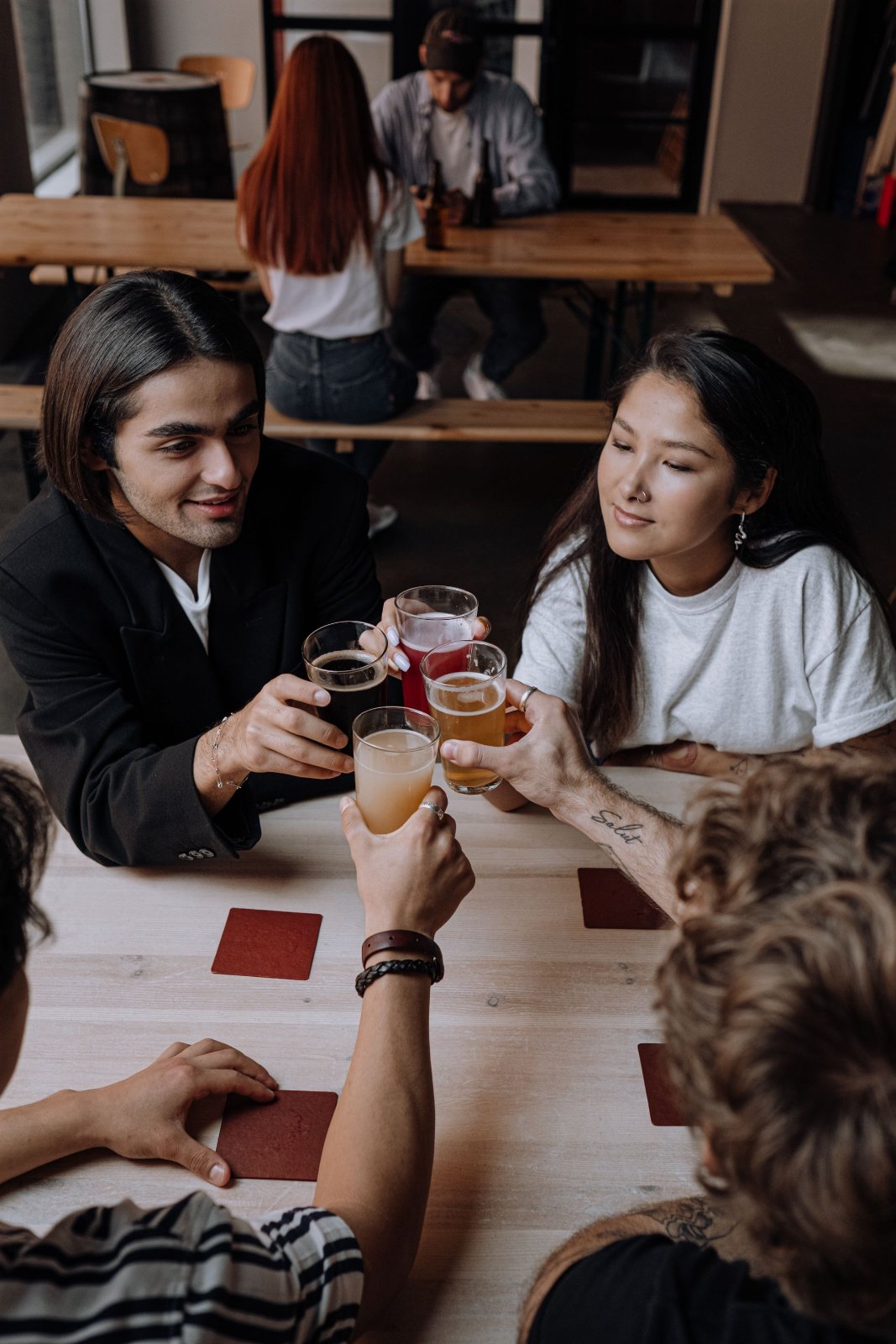
Let’s be honest — when someone mentions a bar crawl in Phoenix, AZ, the image that pops into your head is probably a sweaty Saturday night stumbling from one Roosevelt Row hotspot to the next, shouting over pounding music, and waking up Sunday morning with a headache and a phone full of blurry selfies with people whose last names you’ll never know. Fun? Sometimes. Transformative for your social life? That’s where things get complicated.
This article isn’t a takedown of bar crawls. In fact, we’ll talk about how operators like Barcrawlerz are genuinely doing things differently in the Phoenix social scene. But we do want to challenge a widely accepted cultural assumption: that going out, drinking with strangers, and “putting yourself out there” at bar events is automatically better for your long-term social development than more intentional, sometimes digital, forms of connection.
Spoiler alert: it’s not always true. And understanding why could genuinely change the quality of your friendships and your social confidence for years to come.
The Myth of the Bar Crawl as a Social Skills Builder
There’s a deeply embedded cultural narrative that says if you’re shy, introverted, or struggling to make friends as an adult, you just need to “get out more.” Bar crawls, happy hours, and nightlife events are often prescribed as the social medicine for loneliness. And on the surface, it makes sense — you’re around people, right? You’re talking, laughing, maybe even exchanging numbers.
But here’s what the research on adult friendship formation actually tells us: meaningful relationships are built on repeated, unplanned interactions and shared vulnerability — not on loud, alcohol-fueled environments where everyone’s performing their most extroverted version of themselves.
“Proximity plus repeated unplanned interactions plus a setting that encourages people to let their guard down” — that’s the formula sociologist Rebecca G. Adams identified as the foundation for adult friendship. Bar crawls hit one of those three, maybe two on a good night.
The noise level alone at most Phoenix bars makes real conversation nearly impossible. You’re not learning about someone’s values, their dreams, their weird obsession with vintage maps, or their complicated relationship with their family. You’re learning their name, maybe their job, and whether they prefer tequila or whiskey. That’s not friendship — that’s small talk with a time limit.
What Actually Happens to Your Social Skills at Most Bar Crawls
You Practice the Wrong Kind of Socializing
Social skills, like any skill, are developed through deliberate practice. The problem with bar crawl socializing is that you’re practicing a very specific, alcohol-assisted, high-stimulation version of human interaction that doesn’t transfer well to sober, everyday life.
Think about it: if you only ever practice public speaking while holding a glass of wine, you’re not actually getting better at public speaking — you’re getting better at tipsy public speaking. The same principle applies to social skills. When your confidence in conversation is consistently propped up by alcohol and the social permission slip of a party environment, you’re not building the internal resources you need to connect with people at a coffee shop, a networking event, or a first date.
In Phoenix’s sprawling social landscape — from the arts district in Roosevelt Row to the suburban sprawl of Chandler and Gilbert — most adults actually spend the majority of their social lives in low-key, sober settings. Developing skills for those environments is far more valuable.
The Connections Rarely Stick
How many genuine, lasting friendships have you made at a bar crawl? Be honest. Most people can count them on one hand — or zero fingers. This isn’t a personal failing; it’s structural. Bar crawl environments are designed for fun and novelty, not depth. You meet someone, you have a great conversation (or what feels like one in the moment), you exchange numbers, and then… nothing. Maybe a follow on Instagram. Maybe a text that never gets answered.
This cycle can actually be damaging over time. Repeated experiences of surface-level connection followed by nothing can subtly erode your belief in your own ability to form friendships. You start to think, “I’m bad at making friends,” when really, you’ve just been practicing in the wrong gym.
Alcohol as a Social Crutch
This one’s uncomfortable to say, but it needs to be said: for many people, regular participation in bar crawl culture quietly reinforces a dependency on alcohol as a social lubricant. You stop believing you can be interesting, funny, or confident without a drink in your hand. That’s not a social skill — that’s a social liability.
In a city like Phoenix, where the heat drives a significant portion of social life indoors and into bars and restaurants for much of the year, this pattern can become deeply entrenched without people even noticing it.
The Case for Building Genuine Friendships Online
Now, before you roll your eyes, hear us out. We’re not talking about doomscrolling Twitter or collecting Facebook friends you haven’t spoken to since 2009. We’re talking about intentional, values-aligned online community building — and the evidence that it works is overwhelming.
Online Communities Allow You to Filter for Compatibility First
One of the biggest challenges of adult friendship is finding people who share your interests, values, and sense of humor. In a bar crawl, you’re essentially playing social roulette — you get whoever happens to be standing next to you at the bar. Online communities let you find your people first, then deepen those connections over time.
Whether it’s a Discord server for Phoenix board game enthusiasts, a Reddit community for local hikers who tackle South Mountain on weekday mornings, or a Facebook group for Phoenix-area entrepreneurs, these spaces allow you to establish common ground before you ever meet in person. That shared foundation makes in-person connection dramatically easier and more likely to stick.
Text-Based Communication Builds Different (and Valuable) Social Muscles
Writing thoughtful messages, responding to someone’s ideas with care, learning to express yourself clearly without the benefit of facial expressions or tone of voice — these are genuinely sophisticated social skills that make you a better communicator across all contexts.
Many people who invest in online community building find that their in-person social skills actually improve as a side effect. When you’re used to thinking carefully about what you want to say before you say it, you bring more intentionality to face-to-face conversations too.
Vulnerability Happens More Naturally Online
It sounds counterintuitive, but many people find it easier to be genuinely vulnerable in text-based online spaces than in loud, performative bar environments. The slight distance that online communication provides can lower defenses enough for real sharing to happen — the kind of sharing that actually builds friendship.
“Vulnerability is the birthplace of connection and the path to the feeling of worthiness.” — Brené Brown
In a bar, vulnerability is often masked by bravado, humor, and alcohol. Online, in the right communities, people share their real struggles, passions, and questions — and that’s where actual bonds form.
But Wait — Not All Bar Crawls Are Created Equal
Here’s where we need to pump the brakes on our own argument, because nuance matters. The critique above applies to most generic bar crawl experiences. But there’s a growing category of thoughtfully designed social events that actually do support genuine connection — and Phoenix has some excellent examples.
What Barcrawlerz Does Differently in Phoenix
Barcrawlerz has built a reputation in the Phoenix social scene for approaching bar crawls with more intentionality than your average pub crawl operation. Rather than just herding a crowd from one bar to the next with a wristband and a prayer, Barcrawlerz incorporates structured social elements that actually give participants a fighting chance at making real connections.
Events organized through Barcrawlerz in Phoenix tend to attract people who are specifically interested in meeting others — not just getting drunk in a group. The curated venue selection across Phoenix’s diverse neighborhoods, from the historic bars of downtown to the craft cocktail spots in Scottsdale, gives participants shared experiences to bond over rather than just shared proximity.
When a bar crawl is designed with connection as a primary goal — not just entertainment — the dynamics shift meaningfully. Icebreaker activities, smaller group sizes, and thoughtfully chosen venues where conversation is actually possible can turn a bar crawl from a social skills trap into a genuinely valuable experience.
The Key Variables That Determine Whether a Bar Crawl Helps or Hurts Your Social Skills
Noise Level and Venue Selection
Can you actually hear the person you’re talking to? This single variable determines more about the quality of social interaction at a bar crawl than almost anything else. Events that include at least some venues where conversation is possible — rooftop bars, outdoor patios, quieter cocktail lounges — give participants the opportunity to move past small talk.
Group Size and Structure
Large, anonymous bar crawls with hundreds of participants are social chaos. Smaller, curated groups where you’re likely to encounter the same people multiple times throughout the evening create the conditions for repeated interaction — which, as we noted earlier, is one of the key ingredients for friendship formation.
Shared Purpose Beyond Drinking
The best social events, bar crawl or otherwise, have a shared purpose that gives participants something to talk about and bond over. A themed crawl, a charity fundraiser crawl, or a crawl organized around a specific interest group gives people a conversational anchor that goes beyond “so, do you come here often?”
Intentional Follow-Up Mechanisms
Does the event organizer facilitate any kind of follow-up connection? A group chat, a social media community, a follow-up event? Without some mechanism for continued contact, even the best in-person connections tend to fade. The best bar crawl organizers understand this and build it into their model.
A Practical Framework: How to Build Your Social Life Strategically in Phoenix
Rather than choosing between bar crawls and online community building as if they’re mutually exclusive, the smartest approach is to use both strategically — understanding what each is actually good for.
Use Online Communities for Depth and Discovery
Phoenix has a surprisingly robust online community ecosystem. Local Facebook groups, Meetup.com, Nextdoor, and hobby-specific Discord servers are all active and worth exploring. Use these spaces to find your people — those who share your specific interests, values, and lifestyle. Invest in these communities consistently, not just when you’re feeling lonely.
Some particularly active Phoenix online communities worth exploring include groups for local hikers, craft beer enthusiasts, board game players, entrepreneurs, and creative professionals. The Sonoran Desert landscape and Phoenix’s unique culture give local online communities a distinct flavor that makes them genuinely interesting spaces.
Use Bar Crawls for Exposure and Energy, Not Depth
Attend bar crawls — especially well-organized ones like those run by Barcrawlerz in Phoenix — for the energy, the novelty, and the exposure to new people. But go in with realistic expectations. Your goal isn’t to find a lifelong best friend at a bar crawl. Your goal is to practice social confidence, enjoy the experience, and maybe identify one or two people worth following up with in a lower-key setting.
Think of bar crawls as the top of your social funnel, not the destination. They’re great for casting a wide net. They’re terrible for building the deep connections that actually sustain your well-being.
Create Your Own Third Spaces
Sociologist Ray Oldenburg coined the term “third place” to describe the social environments beyond home (first place) and work (second place) where community happens. Historically, these were places like barbershops, coffee shops, and — yes — bars. The challenge in modern Phoenix, with its car-dependent sprawl and indoor-focused culture, is that third places are harder to come by.
The solution? Create your own. Host a monthly game night. Start a neighborhood walking group. Organize a monthly dinner where everyone brings a dish from a different culture. These intentional, recurring, low-key social gatherings are where adult friendships actually form and deepen.
Be the Connector, Not Just the Participant
One of the most powerful things you can do for your social life — both online and in-person — is to shift from being a passive participant to being an active connector. Introduce people to each other. Share opportunities. Organize events. People who actively create social opportunities for others tend to have the richest social lives, because they’re always at the center of a growing network rather than waiting to be invited into someone else’s.
The Long Game: What Your Social Life Looks Like in 5 Years
Here’s the thought experiment that really clarifies this whole conversation: imagine two versions of yourself, five years from now.
Version A has spent those five years attending bar crawls regularly, collecting acquaintances, having fun on Saturday nights, and waking up Sunday mornings with fading memories and a phone full of contacts they never text. Their social skills in loud, alcohol-fueled environments are excellent. Their ability to connect deeply with anyone is… underdeveloped.
Version B has spent those five years investing in a mix of intentional online community building and carefully chosen in-person experiences. They have a core group of five to ten people who genuinely know them, who they can call in a crisis, who they share real experiences with. Their social confidence is built on actual self-knowledge and communication skills, not on alcohol and party environments.
Which version of yourself do you want to be?
The quality of your social life is determined not by how many people you’ve met, but by how deeply you’ve connected with the ones who matter.
Giving Bar Crawls Their Fair Credit
In the spirit of balance, let’s acknowledge what bar crawls genuinely do well — because dismissing them entirely would be both unfair and inaccurate.
Bar crawls are excellent for overcoming social anxiety in a low-stakes environment. When you’re part of a group, you have built-in social permission to talk to strangers. That can be genuinely therapeutic for people who struggle with social confidence. They’re also great for exploring a city — Phoenix’s bar scene, from the craft cocktail bars of downtown to the dive bars of Tempe, is genuinely interesting, and a well-organized crawl is a fantastic way to discover venues you’d never find on your own.
They’re also just fun. And fun matters. Joy is a legitimate social good. Not everything needs to be optimized for long-term friendship formation. Sometimes you just want a good night out, and there’s absolutely nothing wrong with that.
The problem isn’t bar crawls themselves. The problem is treating them as a substitute for the deeper social work that actually builds a fulfilling social life.
Final Thoughts: Reframe How You Think About Social Investment
The most important shift you can make is to start thinking about your social life as something you actively invest in, rather than something that just happens to you on weekend nights. That investment looks different for everyone, but it almost always involves some combination of:
Intentional community finding — using online tools to locate people who share your specific interests and values, rather than hoping to stumble across them at a bar.
Repeated, lower-key interactions — creating or joining recurring social events where you see the same people over and over, giving friendships the time they need to develop.
Genuine vulnerability — allowing yourself to be known, not just seen. Sharing your actual thoughts, feelings, and experiences rather than performing your most socially acceptable self.
Strategic use of events like bar crawls — enjoying them for what they’re actually good at (fun, exposure, energy) rather than expecting them to deliver what they structurally can’t (deep, lasting friendship).
If you’re in Phoenix and you want to experience the bar crawl scene at its best — with the kind of thoughtful organization that actually gives you a shot at meeting interesting people — check out what Barcrawlerz has going on. They’re doing the format better than most. Just go in with clear eyes about what you’re there for, and make sure you’re also investing in the deeper social work that bar crawls alone can’t do for you.
Your long-term social life will thank you for it.
Summary: Key Takeaways for Building a Better Social Life in Phoenix
To wrap everything up in a way that’s actually actionable, here are the core insights from this article:
Most bar crawls, by their structural nature, reinforce surface-level socializing rather than deep connection. The noise, the alcohol, and the transient nature of the interactions work against the conditions that actually produce lasting friendship.
Intentional online community building — when done thoughtfully — can be more effective for long-term social development than random bar-based socializing, because it allows you to filter for compatibility and practice more deliberate communication.
Not all bar crawls are equal. Well-organized events like those offered by Barcrawlerz in Phoenix incorporate elements that make genuine connection more likely — smaller groups, thoughtful venue selection, and shared purpose beyond drinking.
The smartest approach is a strategic blend: use online communities for depth and discovery, use bar crawls for energy and exposure, and create your own recurring social spaces for the sustained interaction that friendship actually requires.
Phoenix is a big, sprawling city with a surprisingly rich social ecosystem — both online and in-person. With the right approach, building a genuinely fulfilling social life here is absolutely possible. It just requires more intention than showing up to a bar crawl and hoping for the best.